Multi-Cloud CDN Interconnection: Designing an Intelligent Traffic Platform to Break Vendor Lock-in
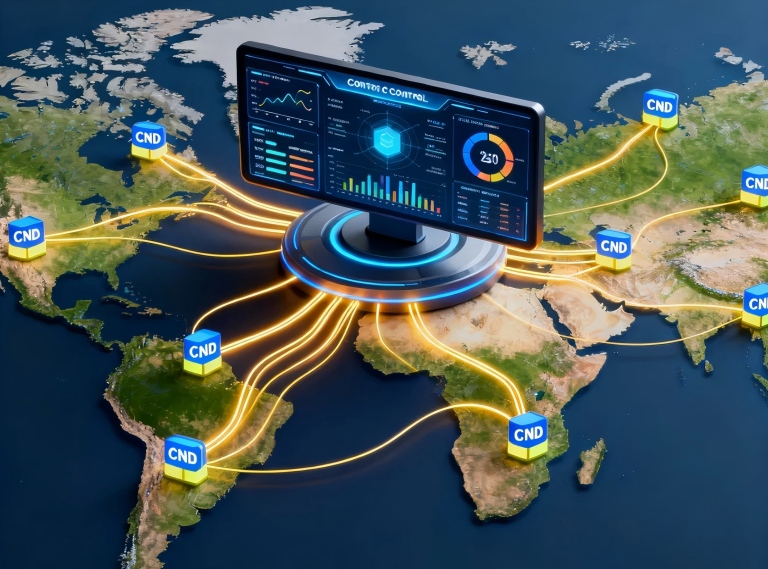
Have you ever found yourself trapped in a CDN vendor's ecosystem? You know the feeling - when switching costs become so high that you're essentially held hostage by a single provider's pricing, performance, and limitations. It's like being in a bad relationship where you know you should leave, but the practical barriers feel insurmountable.
Let me tell you about a better way. Imagine having the freedom to route your traffic through the best available path at any given moment, regardless of which CDN provider owns the infrastructure. This isn't some distant future fantasy - it's what multi-cloud CDN interconnection makes possible today.
Think of your current CDN setup as a single-lane highway. All your traffic must flow through this one road, regardless of traffic jams, toll costs, or road conditions. Now picture what we're building: an intelligent air traffic control system that can direct planes to different airports based on weather, capacity, and timing. That's the fundamental shift we're talking about.
So what exactly makes up this intelligent traffic platform? At its core, we're building three key components that work in harmony. First, we have the control plane - this is mission control, where all your traffic policies and routing rules live. Then comes the real-time decision engine, the brain that processes millions of data points about network conditions, performance metrics, and cost factors every second. Finally, we have the vendor abstraction layer, which translates your unified policies into each CDN provider's specific language and API calls.
The magic happens in the decision engine. It's constantly asking and answering questions: Is CDN A experiencing higher latency in Southeast Asia right now? Has CDN B's pricing changed for European traffic? Is there a emerging security threat that makes CDN C temporarily unsuitable for financial transactions? This isn't just about failover - it's about continuous optimization across multiple dimensions.
Let me share a real example. One of our e-commerce clients was using a single major CDN provider. During peak sales events, they'd experience performance degradation despite paying for premium services. After implementing our intelligent traffic platform, they could seamlessly blend three different CDN providers. Static content went to the cost-effective provider, dynamic API calls routed through the lowest-latency network, and payment processing used the most secure pathways. The result? 40% better performance during Black Friday while reducing their overall CDN spend by 22%.
But here's what most people don't talk about: the implementation journey. You don't need to boil the ocean. Start with what I call the "two-plus-one" strategy. Begin with two CDN providers that complement each other's strengths - maybe one excels in global coverage while another dominates in your key markets. Then add your intelligent routing layer. Open-source tools like Envoy Proxy make this increasingly accessible . Build your health checks, set up basic routing rules, and suddenly you have a foundation that can grow with your needs.
The vendor abstraction layer might be the most satisfying part to build. It's where you turn each CDN provider's unique complexities into a standardized interface. Think of it like learning to drive different cars - once you understand the basic principles of acceleration, braking, and steering, you can handle everything from a compact car to a luxury SUV. Your application shouldn't need to understand each CDN's peculiar API signatures or rate limits.
What about the business side? Beyond the obvious technical benefits, this approach transforms your negotiating position. When you can realistically shift 30% of your traffic to another provider within minutes, your commercial discussions take on a completely different tone. Suddenly, you're not begging for discounts - you're having strategic conversations about partnership.
The evolution continues as we integrate machine learning capabilities. The system learns that your Australian users typically peak around 2 PM local time, that your video content performs better on certain networks, and that some providers handle sudden traffic spikes more gracefully than others. It's not just reacting to current conditions - it's anticipating needs and preparing pathways.
Security becomes inherently stronger in this model. Instead of relying on one provider's security stack, you can deploy defense in depth. Maybe you route all traffic through a specialized DDoS protection service first, then distribute it across your CDN network. Perhaps you use different providers for different security zones within your application.
I won't pretend this is effortless. It requires thoughtful architecture and initial investment. But the alternative - being locked into a single provider's roadmap, pricing changes, and limitations - carries its own significant costs. The question isn't whether you can afford to implement multi-cloud CDN interconnection, but whether you can afford not to.
Your journey starts with a simple decision: acknowledge that no single CDN provider can be the best at everything, everywhere, all the time. Then take that first step - prototype with two providers, build your routing logic, and discover the freedom that comes from truly controlling your own destiny.