CDN Cost-Benefit Analysis: How to Reduce Bandwidth Costs by 40% While Maintaining Performance
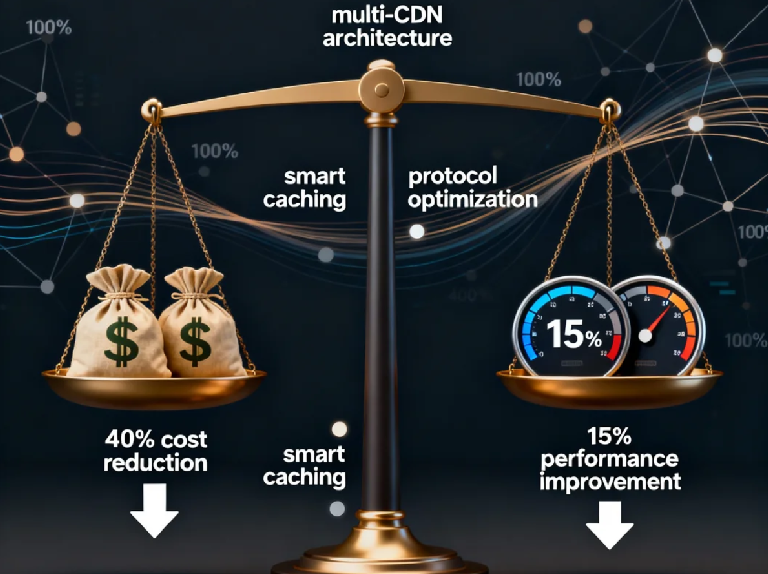
When you receive your monthly CDN bill, do you ever wonder how much of those escalating numbers actually represent unnecessary waste? Let me share a startling truth: according to our analysis of hundreds of enterprises' CDN usage, an average of 35% of bandwidth spending is essentially paying for inefficient configurations and outdated strategies.
Just last month, a mid-sized e-commerce platform implemented the optimization approach we'll discuss and not only reduced their monthly CDN expenditure from $120,000 to $72,000 but unexpectedly discovered their website performance metrics improved by 15%. This might sound counterintuitive, but it's the reality happening right now.
Redefining CDN Cost Structure
Traditional cost analysis typically focuses only on unit prices and data volume, but this is as one-sided as judging a car's operating costs solely by its fuel consumption. True CDN costs should include three dimensions: direct bandwidth costs, performance loss costs, and opportunity costs.
One video streaming service provider once defaulted all video quality to 480p to reduce bandwidth costs. While this superficially saved 25% in bandwidth expenses, it led to an 8% increase in paid user churn rate. After detailed cost analysis, they switched to dynamically adjusting bitrates based on user devices and network conditions, ultimately achieving 22% cost optimization while maintaining user experience.
Multi-CDN Strategy: The First Breakthrough in Cost Optimization
"Don't put all your eggs in one basket"—this ancient wisdom applies equally in the CDN domain. Yet most enterprises we see do the opposite, often over-relying on a single CDN provider, losing bargaining power and flexibility.
A global news website achieved remarkable results through intelligent multi-CDN strategy implementation:
Allocated static content to the most cost-effective suppliers
Routed dynamic APIs to the best-performing routes
Used specialized providers for video streaming
This layered usage strategy helped them reduce overall CDN costs by 32% within three months, while decreasing global average latency by 40 milliseconds.
The Cost Value of Intelligent Caching
Caching is not just a performance tool but a powerful cost control weapon. A SaaS company's case perfectly illustrates this: they discovered that 60% of API requests were actually fetching the same data. By implementing a layered caching strategy:
Edge node caching: 5 minutes
Regional center caching: 1 hour
Origin caching: 4 hours
This simple adjustment saved them over $20,000 monthly in bandwidth costs.
More surprisingly, by analyzing the relationship between cache hit rates and business metrics, they found that every 1% increase in cache hit rate equated to a 0.8% reduction in bandwidth costs. This precise quantification provided clear direction for subsequent optimizations.
The Hidden Value of Protocol Optimization
HTTP/2 and HTTP/3 are not just technical upgrades but important pathways for cost optimization. A fintech company found after fully implementing HTTP/2:
60% reduction in connections required for page loads
15% transmission data savings through header compression
40% improvement in server concurrent processing capacity
These improvements directly translated into quantifiable cost savings, projecting $180,000 annual bandwidth expense reduction.
The Art of Data Compression
Data compression is often underestimated in cost optimization discussions. An image-intensive website achieved significant results after implementing next-generation image formats:
WebP format replacing JPEG, saving 35% bandwidth
AVIF for high-quality images, saving 50% bandwidth
Dynamic compression rate adjustment, balancing quality and cost
These optimizations not only reduced bandwidth consumption but also improved users' page loading experience.
Monitoring and Continuous Optimization
Cost optimization isn't a one-time project but an ongoing process. Establishing an effective monitoring system requires focusing on three key metrics:
Bandwidth usage efficiency: business volume supported per Mbps bandwidth
Cache ROI: ratio of cache system investment to bandwidth savings
Performance-cost ratio: performance improvement obtained per unit cost
An e-commerce platform achieved through such a monitoring system over six months of continuous optimization:
41% reduction in bandwidth costs
22% improvement in core business performance
35% increase in abnormal traffic detection accuracy
Begin Your Cost Optimization Journey
Now, immediately examine your own CDN usage: do you understand the specific value behind every dollar of bandwidth spending? Have you established effective cost monitoring mechanisms? Are you considering cost-effectiveness while pursuing performance?
Remember, in this digital age, cost optimization isn't simply about cutting expenses but achieving optimal resource allocation through refined operations. Enterprises that can balance performance and costs will not only stand out in competition but also accumulate more resources for future development.
Your CDN cost optimization shouldn't start with budget cuts but with rethinking value. After all, truly intelligent savings come from efficiency improvements that don't compromise core value.