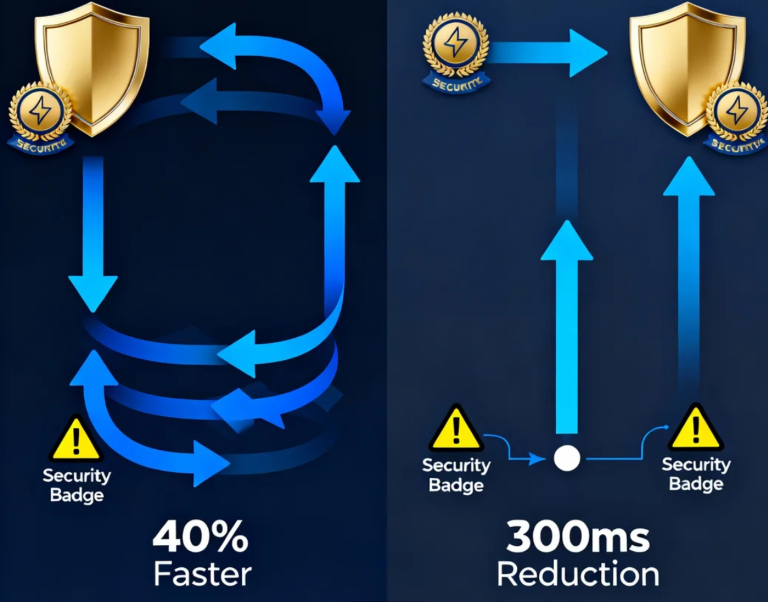
When you first heard about TLS 1.3's 0-RTT feature, did you find yourself torn between excitement about performance improvements and concern about security risks? Let me share a real case: a well-known e-commerce platform reduced their homepage load time by a full 300 milliseconds after enabling 0-RTT, only to encounter a carefully designed replay attack three months later that compromised hundreds of user sessions.
This case reveals a harsh reality: in the pursuit of ultimate performance, security often becomes the first casualty. But today, I want to tell you that performance and security aren't mutually exclusive choices - they can be intelligently balanced.
Reunderstanding 0-RTT: More Than Just Performance Optimization
Traditional TLS handshakes are like two strangers meeting for the first time: they need repeated identity verification, trust establishment, and only then can they start communicating. 0-RTT, however, is like old friends reuniting - they can start talking directly. This "zero round-trip time" feature can indeed reduce connection establishment latency by 30%-50%.
But there's a crucial misconception hidden here: 0-RTT isn't truly "zero latency" in the absolute sense, but rather "pre-pays" part of the handshake process in previous sessions. This design is like credit card pre-authorization - convenient and fast, but also sowing seeds for potential security risks.
An engineer from a video streaming service provider told me that after enabling 0-RTT, their users' initial playback buffer time decreased from 1.2 seconds to 0.8 seconds. This improvement directly led to a 5% increase in user retention. However, they also had to invest significant effort addressing the ensuing security challenges.
Replay Attacks: An Underestimated Threat
The principle of replay attacks is surprisingly simple: attackers intercept valid 0-RTT data and resend it at different times or locations. This is like someone copying your room key - while they can't alter the key itself, they can enter your room anytime.
The most concerning aspect is that such attacks are often difficult for traditional security systems to detect. Because the replayed data itself is legal and encrypted, like genuine currency being reused, individual transactions appear completely normal.
Lessons from the financial industry are particularly telling. A payment platform encountered a carefully orchestrated replay attack shortly after deploying 0-RTT. By repeatedly sending the same payment requests, attackers completed multiple transactions without users' knowledge. Although each amount was small, the cumulative losses were substantial.
Building a Defense-in-Depth System
Facing these challenges, we need to establish multi-layered protection strategies:
First is time window control. Set reasonable time validity for 0-RTT data, like setting expiration dates for coupons. Typically, this window shouldn't exceed 10 minutes, considering both network latency and limiting attackers' operational space.
A cloud computing vendor's practice is worth referencing: they use dynamic time window mechanisms, adjusting validity periods based on request type and risk assessment. For sensitive operations, time windows shrink to 1 minute; for regular content requests, they can be appropriately relaxed.
Second is request uniqueness verification. By introducing nonces or sequence numbers, ensure each request can only be used once. This is like adding unique serial numbers to each transaction, preventing the same request from being processed repeatedly.
E-commerce platforms typically adopt more refined strategies: for shopping cart operations, each request must contain an incremental sequence number; for product browsing, relatively loose verification mechanisms can be used.
Most importantly is application-layer protection. Implement additional security checks at the application level, such as requiring secondary confirmation for critical operations, or real-time monitoring of abnormal behaviors. This is like adding an access control system outside the safe - even if the first line of defense is breached, subsequent protection remains.
The Art of Balance in Practice
In actual deployments, we need to make precise trade-offs based on business scenarios:
Content delivery networks typically enable 0-RTT for static resources, as these requests are naturally idempotent - even if replayed, they won't cause substantial harm. For sensitive operations like login and payment, complete security handshakes are maintained.
A social media platform's experience is enlightening: they set user dynamic information feeds as 0-RTT available, while private messages and account settings require complete handshakes. This approach enjoys performance benefits while ensuring critical operation security.
Monitoring and Response: Key to Security Closure
Deploying 0-RTT is just the beginning; continuous monitoring is core to ensuring security. We need to establish comprehensive monitoring systems to detect abnormal patterns in real-time.
Effective monitoring should include:
Repeated request frequency analysis
Geographic location anomaly detection
User behavior pattern comparison
Real-time threat intelligence integration
When suspicious activity is detected, the system should automatically trigger protective measures, such as temporarily disabling 0-RTT for specific users, or requiring additional authentication.
Looking Forward: Smarter Solutions
Future 0-RTT security protection will become more intelligent. Machine learning-based anomaly detection systems can learn each user's normal behavior patterns in real-time, promptly identifying deviations from routine operations.
Some cutting-edge solutions are exploring blockchain technology to record request fingerprints, ensuring each request's uniqueness and immutability. While these technologies are still developing, they demonstrate possible future directions.
Begin Your 0-RTT Journey
Now is the time to reevaluate your TLS configuration. But remember, enabling 0-RTT isn't a simple switch operation - it's a systematic project requiring careful design and continuous optimization.
Recommended starting steps:
Audit existing application interfaces, identifying business scenarios suitable for 0-RTT
Develop phased implementation plans, starting with lower-risk interfaces
Establish comprehensive monitoring and emergency response mechanisms
Conduct regular security assessments and strategy adjustments
In this era pursuing ultimate user experience, 0-RTT provides us with a rare opportunity: while improving performance, if we're sufficiently cautious and wise, we can also ensure security isn't compromised.
After all, the best technology isn't what runs fastest, but what can sprint without falling. Is your system ready to begin this dance of balancing speed and security?