From Blueprint to Deployment: Standardized Architecture Recipes for Servers, SSL & CDN Across 5 Core Business Types
It’s 2 AM in a startup’s makeshift office. Three co-founders are staring at a whiteboard, paralyzed. They’ve just closed their seed round, and the excitement has curdled into silent tension. The CTO is advocating for a robust Kubernetes cluster from day one. The Head of Product demands a deployable MVP by next week. The sales-driven CEO insists the technology must "look and feel enterprise-grade." This isn't a simple disagreement; it's the symptom of a foundational gap: a lack of a clear, business-aligned path from vision to technical implementation.
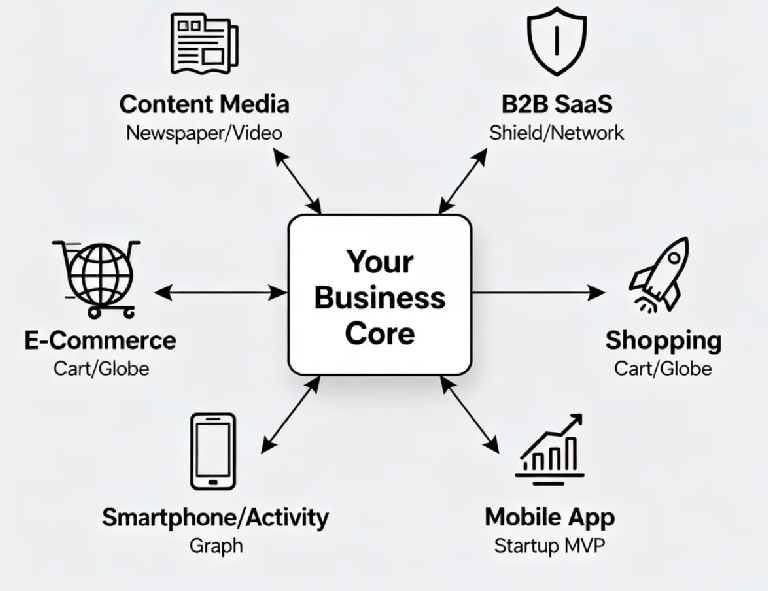
Having architected and audited hundreds of deployments, a pattern emerges. Most successful digital businesses don't need a completely novel stack; they need the right stack, assembled from proven components and tuned for their specific business DNA. Today, let’s move beyond theory and abstract best practices. Instead, I’m giving you five battle-tested, "shopping list" architecture recipes. Each one pairs a business type with a concrete server, SSL, and CDN blueprint, complete with a configuration checklist and a realistic cost-versus-complexity model.
Recipe #1: The Content Media & Blog – Maximizing Cache, Minimizing Cost
Core DNA: Primarily static content, a globally dispersed readership, revenue driven by ads or subscriptions, and limited technical staff.
The Central Paradox: How to deliver sub-second load times worldwide with near-zero operational overhead, while ensuring content updates propagate instantly.
The Blueprint:
text
Global Reader → [Intelligent CDN] → [Edge Cache] → (Cache Miss Only) → [Origin: Object Storage]
Server Strategy: Go Serverless. Abandon traditional servers entirely. Your origin should be a global Object Storage service (like AWS S3, Google Cloud Storage, or Cloudflare R2). It’s infinitely scalable, pay-as-you-go, and requires zero patching or maintenance. This is "de-servering" in action.
SSL/TLS Strategy: Performance First. Use a CDN-managed, wildcard DV certificate. No transactions occur here, so the trust premium of OV/EV certificates is unnecessary. The critical move is enforcing TLS 1.3 and HTTP/2/3 at the edge to maximize throughput.
CDN Configuration:
Cache Rules: Set multi-year cache lifetimes for immutable assets (images, CSS, JS) using content hashing for versioning.
Edge Logic: Use CDN rules for instant geolocation-based redirects, simple A/B testing, or URL rewrites—no origin server needed.
Purge & Pre-warm: Automate cache purges on publish and pre-warm hot content to edge nodes globally.
The Implementation Checklist:
Configure origin bucket as public-read.
Enable Image Optimization and Automatic WebP Conversion at the CDN.
Set correct
Cache-Controlheaders (public, max-age=31536000, immutablefor assets).Create a firewall (WAF) rule to block all direct access to the origin bucket except from your CDN's IP ranges.
The Cost & Complexity Mindset:
Primary Cost Driver: CDN egress fees (80%+ of the bill). Your north star metric is Cache Hit Ratio; aim for >95%.
Counter-Intuitive Insight: Paying for a CDN with superior routing intelligence can be cheaper than opting for the lowest per-GB rate. A smart CDN that reduces latency can increase pageviews and ad engagement, directly boosting revenue and offsetting a slightly higher fee.
Recipe #2: The B2B SaaS & Tools Platform – Trust as a Core Feature
Core DNA: Enterprise users, complex business logic, high data sensitivity, API-first design, and stringent compliance requirements (SOC 2, ISO 27001).
The Central Paradox: How to maintain blistering performance and ironclad stability across complex, dynamic interactions while broadcasting unwavering trust and security.
The Blueprint:
text
Enterprise Client → [CDN with Advanced WAF] → [API Gateway] → [App Cluster] → [Database]
                         ↑ SSL Termination                ↑ Rate Limiting, Auth
Server Strategy: Predictable Performance. Choose managed VMs or Kubernetes clusters over pure serverless. B2B workloads are stable and predictable, often requiring persistent, high-throughput connections to stateful databases. Use a hybrid model: containerized, auto-scaling app tiers, with high-IOPS, dedicated instances for core databases.
SSL/TLS Strategy: A Tiered Trust Model.
Your customer-facing domain (
app.yourcompany.com) must use an EV or OV certificate. The green address bar is a non-negotiable trust signal for enterprise buyers.For internal microservices, implement mutual TLS (mTLS) with a private CA, building a zero-trust network.
Enforce HSTS preloading so browsers only ever connect via HTTPS.
CDN Configuration:
Its primary role shifts from caching to security and acceleration. Enable a robust WAF tuned for the OWASP Top 10 and implement granular, API-level rate limiting.
Cache only truly static assets: documentation, SDKs, landing pages.
Use edge functions for lightweight API response caching (e.g., cache
GET /api/v1/featuresfor 30 seconds).
The Implementation Checklist:
Deploy dedicated EV/OV certificates for login, checkout, and admin subdomains.
Configure API Gateway with JWT validation and per-client rate limits.
Enable and fine-tune the CDN’s Bot Management and DDoS Protection suites.
Implement centralized certificate monitoring with automated renewal.
The Cost & Complexity Mindset:
Primary Cost Driver: Compute resources and premium security/WAF licensing.
Golden Rule: Investment in security and trust is not an expense; it's a core product feature. The annual cost of an EV certificate is often less than the value of a single enterprise deal it helps secure.
Recipe #3: The E-Commerce & Retail Engine – Surviving the Stampede
Core DNA: Spiky, unpredictable traffic (flash sales), payment processing, real-time inventory synchronization, and a global customer base.
The Central Paradox: How to seamlessly absorb traffic spikes that are 100x normal load, guarantee a faultless payment pipeline, and deliver a consistently fast experience from London to Sydney.
The Blueprint:
text
Global Shopper → [Traffic-Managing CDN] → [Regional Application Pool] → [Central Inventory DB]
                               ↑ Payment requests bypass cache to fortified origin
Server Strategy: Hybrid Elasticity. Baseline traffic is handled by a reliable VM/container cluster. For flash sales, pre-integrate cloud "burst" capacity to scale the stateless frontend layer instantly. The cart, inventory, and order services run on performance-optimized, dedicated hardware for consistency.
SSL/TLS Strategy:
Product browsing pages can use fast, modern DV certificates.
The cart, checkout, and account pages must use EV certificates. This is where conversion optimization matters most.
Implement OCSP Stapling to shave off critical milliseconds during the SSL handshake in the payment flow.
CDN Configuration:
Static Assets: Cache aggressively at the edge with long TTLs.
Dynamic Content (Price, Inventory): Use short-lived caching (5-60 seconds) with instant purging APIs triggered from your backend.
Critical Paths (Checkout): Create rules to bypass all caching, routing these requests via the most secure, low-latency path directly to your fortified origin.
The Implementation Checklist:
Implement a globally replicated session store (e.g., Redis) for shopping cart persistence.
Configure Real-Time Logging from your CDN to a SIEM for instant attack analysis during sales.
Establish and regularly test a payment gateway failover procedure.
Use CDN features for Geographic Routing to direct users to the nearest application cluster.
The Cost & Complexity Mindset:
Primary Cost Driver: Peak compute and bandwidth. Budget explicitly for burst capacity.
Unbreakable Law: In e-commerce, infrastructure uptime equals revenue. Every dollar spent ensuring the site stays up during a Black Friday sale is a direct investment in captured revenue.
Recipe #4: The Mobile App & Game Backend – The Low-Latency Lifeline
Core DNA: Mobile or desktop clients, persistent WebSocket connections, extreme sensitivity to network jitter, and massive concurrency of stateful data.
The Central Paradox: How to maintain seamless, real-time sync for millions of concurrent users on unstable mobile networks while defending against connection-layer attacks.
The Blueprint:
text
Mobile App → [Global Accelerated Network] → [Stateful Connection Gateway] → [Game Logic] → [Real-time DB]
Server Strategy: Network-Optimized Hardware. Select compute instances optimized for high network packet-per-second (PPS) performance or dedicated bare metal. The connection gateway layer, managing millions of WebSockets, needs raw network throughput, not just CPU.
SSL/TLS Strategy: Mandate TLS 1.3 for its 1-RTT and 0-RTT handshakes, crucial for perceived app responsiveness. Since this is app-to-API communication, certificate "branding" matters less. Use ECDSA certificates—they're smaller and faster than RSA, reducing handshake size and time.
CDN Configuration: Traditional CDNs fail here. You need:
A Global Accelerator that uses optimized protocols (like QUIC) over private backbones to reduce intercontinental latency and packet loss.
A provider that offers WebSocket proxying, compression, and connection coalescing.
Specialized DDoS protection tuned for protocol floods (SYN, UDP) and application-layer attacks on WebSockets.
The Implementation Checklist:
Design client SDKs with intelligent reconnection and multi-path failover logic.
Implement connection migration logic in your gateways to handle mobile network switches.
Use protocol buffers or other efficient serialization instead of JSON for real-time data.
Instrument detailed metrics for latency, jitter, and packet loss per geographic region.
The Cost & Complexity Mindset:
Primary Cost Driver: Data transfer across the global accelerator and the compute for stateful connection gateways. Costs scale directly with Monthly Active Users (MAU) and average session length.
Key Insight: Spending on latency reduction is a direct investment in user retention and monetization. The cost of losing a high-value player to lag is far greater than the cost of the infrastructure to prevent it.
Recipe #5: The Startup & MVP – Speed as the Only Currency
Core DNA: Tiny team, rapidly evolving product, need to validate market fit with a working prototype, and extremely constrained budget.
The Central Paradox: How to build something that looks professional and reliable, can scale if needed, but requires almost no ongoing maintenance or upfront technical debt.
The Blueprint:
text
User → [All-in-One Platform / Serverless Ecosystem]
Server Strategy: Full Serverless Embrace. Use platforms like Vercel, Netlify, Google App Engine, or AWS Amplify. Your "server" is a cloud function. You manage zero infrastructure.
SSL/TLS Strategy: Use the platform's automatic, free SSL (usually via Let's Encrypt). It provisions, deploys, and renews certificates with zero human intervention. Perfection.
CDN Configuration: It's built-in and automatic. These platforms globally distribute your frontend and assets the moment you deploy. There is no "CDN config"—it's a default, optimized feature.
The Implementation Checklist:
Adopt a JAMstack architecture: static frontend, dynamic API via serverless functions.
Use a fully managed database (PlanetScale, Supabase, Firebase) with a built-in API.
Store all configuration and secrets in the platform's environment variables.
Set up automatic deployments from your main Git branch.
The Cost & Complexity Mindset:
Primary Cost Driver: Metered serverless function invocations and database operations. Costs can be astonishingly low (tens of dollars per month) for an MVP.
First-Principles Truth: At this stage, time-to-market and opportunity cost are infinitely more valuable than infrastructure pennies. The biggest failure isn't a $100 AWS bill; it's taking three months to build a "scalable architecture" for a product no one wants.
Looking back at that silent, 2 AM conference room, the path is now clear. The CTO-founder would wisely start with Recipe #5 to launch their MVP within weeks. Upon securing their first enterprise pilot, they would methodically evolve into Recipe #2. And the ambitious mobile game idea? It should have been built on Recipe #4 from the very first commit.
The true mastery of architecture lies not in knowing the most esoteric technology, but in possessing a translator's skill—the ability to take the ambiguous language of business ambition and render it into a precise, resilient, and economically sound technical specification. These recipes are your starting lexicon. The blueprint is complete. The deployment awaits.